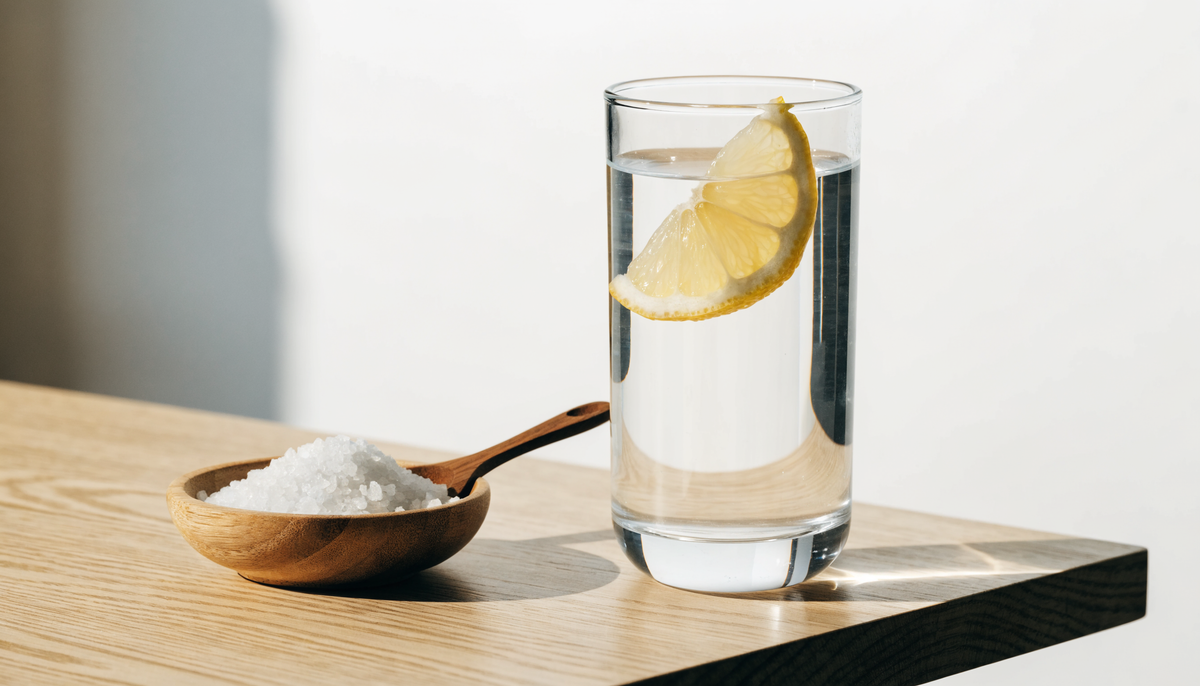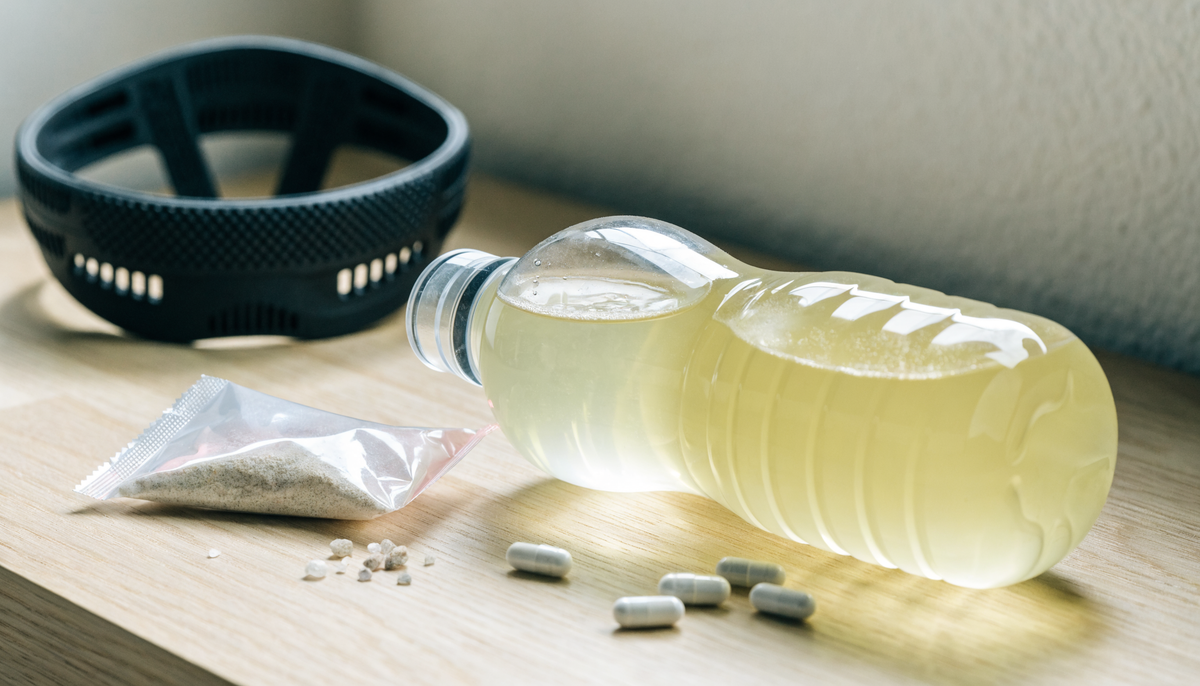
Salt tablets mainly provide concentrated sodium in a capsule that you swallow, while electrolytes combine sodium, potassium, and magnesium dissolved in your drink. For the vast majority of workouts lasting less than an hour, water is enough, and you don't need either.
Both become useful when exercise lasts longer, the temperature rises, or you sweat a lot. Here's how to choose between them based on your sport, how long you exercise, and how much you sweat.
Updated October 21, 2026.
Salt tablets or electrolytes: what's the difference?
A salt tablet is a capsule or tablet concentrated in sodium that you swallow with water, while an electrolyte product dissolves in your drink and combines several minerals. So the difference comes down to both the ingredients and how you take them.
Salt tablets: concentrated sodium
Salt tablets or capsules for athletes mainly contain sodium chloride, sometimes with a little added potassium. Depending on the brand, one capsule provides a few hundred milligrams of sodium: the exact amount is always listed on the label, and that's what you should check.
A quick clarification: in the home improvement aisle, salt tablets are used in water softeners. Here, we're talking only about those designed for sports.
Electrolytes: a blend of minerals to drink
Electrolytes come in powder (often in a stick pack), effervescent tablets, or ready-to-drink beverages. They generally combine sodium, potassium, magnesium, and chloride, providing water and minerals at the same time. To find out when to drink an electrolyte beverage and how to use it, we've covered everything you need to know.
Why does sodium matter when you sweat?
Sodium is the mineral you lose in the greatest quantities through sweat, and it helps your body retain the water you drink. That's why salt tablets and electrolytes focus on sodium first.
The amount lost varies enormously from person to person. A scientific review published in Sports Medicine (Baker, 2017) shows that sweat sodium concentration can vary severalfold between athletes, and that sweat rate depends on the heat, intensity, and your body type. To estimate your own sweat rate, the easiest option is still the weigh-in test to measure your sweat rate.
Signs that you lose a lot of salt
White marks on your cap or shirt after exercise, sweat that stings your eyes, or a very salty taste on your skin are signs that you’re a “salty sweater.” This isn’t a problem in itself, just a cue to adjust your intake during long efforts.
The official EFSA guideline
L'EFSA considers 2 g of sodium per day a safe and adequate intake for an adult, or around 5 g of salt. A typical European diet often provides this amount without any supplements, so salt tablets are only useful to make up for significant losses during exercise.
When water is enough (which is almost always)
For a moderate-intensity session lasting less than an hour, water is enough: there’s no need for salt tablets or electrolytes. Your diet easily makes up for the small sodium losses from a run, a strength-training session, or a yoga class.
L'water is the foundation of your hydration, both day to day and during training. Electrolytes and salt are supplements for specific situations, never substitutes.
Salt tablets or electrolytes: a comparison
Salt tablets offer precise sodium dosing and are ultra-light, while electrolytes provide several minerals and water in one go. Here’s how they compare, point by point.
| Criterion | Salt tablets | Electrolytes (powder, tablet, drink) |
|---|---|---|
| Minerals | Mostly sodium, sometimes a little potassium | Sodium, potassium, magnesium, depending on the product |
| Form | Capsule to swallow with water | Mix it yourself or ready to drink |
| Sodium dosage | Very precise, capsule by capsule | Depends on dilution |
| Taste | Neutral, no taste in your mouth | Flavored, encourages you to drink |
| Water | You need to drink separately | Water and minerals at the same time |
| Portability | A few grams in a pocket | Lightweight sticks, mix in a bottle |
| Typical use | Ultra trail, long-distance triathlon, extreme heat | Sports lasting over an hour, heat, recovery |
How to choose based on your sport and how long you’re exercising?
The right choice depends mainly on how long you exercise, the temperature and how much you sweat. These general guidelines can help you decide what works for you; adjust them based on how you feel.
| Situation | What is usually enough |
|---|---|
| Workout lasting less than an hour, moderate intensity | Water |
| Workout lasting 1 to 2 hours, or in hot weather | Water and electrolytes |
| Effort lasting more than 2 hours, heavy salty sweater | Electrolytes, and possibly salt tablets tested during training |
| A day at work or in class | Water |
| Recovery after an intense workout | Water and a salty meal, or electrolytes |
Running and trail running
For a 10K, water is enough. For a half marathon in hot weather, a marathon or a trail run, electrolytes really come into their own, and some ultrarunners add salt capsules according to a plan they've tested during training.
Cycling, triathlon and racket sports
On a long bike ride, an electrolyte drink in your bottle is easier than a capsule. For padel or tennis in the middle of summer, an electrolyte drink between sets is more than enough.
Precautions to know before taking salt tablets
Always take salt tablets with water, never “just in case” or without having tested them during training. Too much sodium without enough fluid can cause digestive problems, and needs vary too much from person to person to copy a friend's plan.
Conversely, drinking very large amounts of water with no sodium during a very long effort can cause blood sodium levels to drop: this is called hyponatremia during a race. The right balance is to drink when you're thirsty and take in sodium when your effort goes on for a long time. If you're on medication or following a low-salt diet, ask your doctor before taking any supplements.
BUDDY electrolytes: what's inside
BUDDY electrolyte sticks provide 252 mg of sodium, 300 mg of potassium and 56 mg of magnesium per stick, with no sugar or caffeine. Mix one into your water bottle: a box of 10 sticks costs 15 euros. They contain sea salt, soluble corn fiber and stevia, and come in two flavors: Lemon Mint and Peach Citrus. You can find them on the BUDDY electrolyte sticks page.
If you prefer a ready-to-drink option, the BUDDY coconut water-based electrolyte drink provides 300 mg of sodium, 300 mg of potassium, and 56 mg of magnesium per 500 ml, in Raspberry Hibiscus, Peach, or Lemon Lime flavors. Everything is detailed on the page for the BUDDY bottled electrolyte drink.
Before buying, compare the sodium content of the products you're considering: the independent comparison tool Drinkscore publishes drink ingredients with the labels in hand, making it easy to check the figures rather than rely on the packaging.
In summary: water first, sodium when the effort gets longer
Salt tablets and electrolytes address the same need, replacing sodium lost through sweat, but in different ways. For less than an hour of exercise, water is enough. Beyond that, or in hot weather, electrolytes are the simplest solution, while salt tablets remain a specialized option for very long efforts, to be tested during training.
Frequently asked questions about salt tablets and electrolytes
Are salt tablets useful for running?
Only for long efforts or in hot weather, generally lasting more than two hours. For a jog or a 10K, water is enough, and your diet covers your sodium needs.
How many salt tablets should you take per hour?
There is no universal dose, because sodium losses vary greatly from person to person. Follow the manufacturer's instructions, don't exceed them, and always test your strategy during training before a race.
Do electrolytes replace water?
No, water remains the basis of hydration and is enough in most situations. Electrolytes supplement water during long efforts, in hot weather, or after a hard workout.
Is taking salt tablets every day a good idea?
No, without intense exercise or heavy sweating, they aren't necessary. L’EFSA recommends 2 g of sodium per day for an adult, an amount that people often already get from their diet.
What is the difference between electrolyte tablets and salt tablets?
Salt tablets mainly provide sodium and are swallowed with water. Electrolyte tablets, often effervescent, dissolve in water and combine sodium, potassium, and magnesium.