Soluble fiber has been everywhere in wellness conversations for the past few months, and that's no coincidence. It nourishes your microbiome, regulates your digestion, and helps you stay full longer between meals. Yet most people still don't consume enough of it every day. Here's what soluble fiber really is, why it matters so much, and how to enjoy its benefits easily, without completely overhauling your diet.
What exactly is soluble fiber?
A simple definition
Soluble fiber is a type of carbohydrate that the body doesn't digest like other carbohydrates. When it comes into contact with water, it turns into a kind of gel in the stomach and intestines. This gel slows digestion, captures certain nutrients along the way, and mainly nourishes the good bacteria in your gut. It occurs naturally in oats, legumes, flax seeds, chia seeds, certain fruits such as apples and pears, and supplements such as inulin and FOS.
Soluble and insoluble fiber: what's the difference?
Insoluble fiber doesn't dissolve in water. It increases stool bulk and speeds up digestion, a bit like a mechanical broom. Soluble fiber plays a subtler role: it nourishes the microbiome, helps regulate blood sugar, and prolongs the feeling of fullness. Both types are useful, but if your goal is gentler digestion or better appetite management, soluble fiber is the one to prioritize.
Soluble fiber also plays a role in the absorption of water and minerals in the intestines. That's one of the reasons our electrolyte powder contains it, along with potassium, magnesium, and sea salt.
The tangible digestive benefits of soluble fiber
A real boost for your microbiome
The bacteria in your gut love soluble fiber. They ferment it and, in return, produce short-chain fatty acids, compounds that nourish the cells in your colon and support your immune system. A balanced microbiome also means less bloating, better nutrient absorption, and, according to several recent studies, a direct link with your everyday mood and energy levels.
More regular digestion, in both directions
By forming a viscous gel, soluble fiber retains water in the intestines. As a result, it helps soften stools in cases of constipation, but it also plays the opposite role when digestion is too fast by absorbing excess liquid. This dual regulating effect is what makes it so useful every day, whatever your digestive profile.
A feeling of fullness that lasts longer
By slowing stomach emptying, soluble fiber helps you feel full for longer after a meal. It's a real advantage if you're trying to limit snacking or stabilize your energy throughout the day, without needing to count every calorie.
How much soluble fiber should you have per day, and how can you add it without bloating?
The recommended amount
Recommendations generally call for around 25 to 30 grams of fiber per day for an adult, including both soluble and insoluble fiber. In practice, most people in France and Belgium consume half that amount. You don't need to change everything overnight; the main idea is to gradually increase your intake.
Good habits to avoid discomfort
Increase your intake little by little over several weeks to give your intestines time to adapt. Drink enough water throughout the day: without hydration, fiber can't perform its regulating gel-forming role, and the opposite effect can occur. Also choose a variety of sources rather than just one, for a more complete intake that is better tolerated.
Good digestion often goes hand in hand with good hydration. Our electrolyte drink guide explains when minerals become useful in everyday life.
Where to easily find soluble fiber in your diet
At breakfast
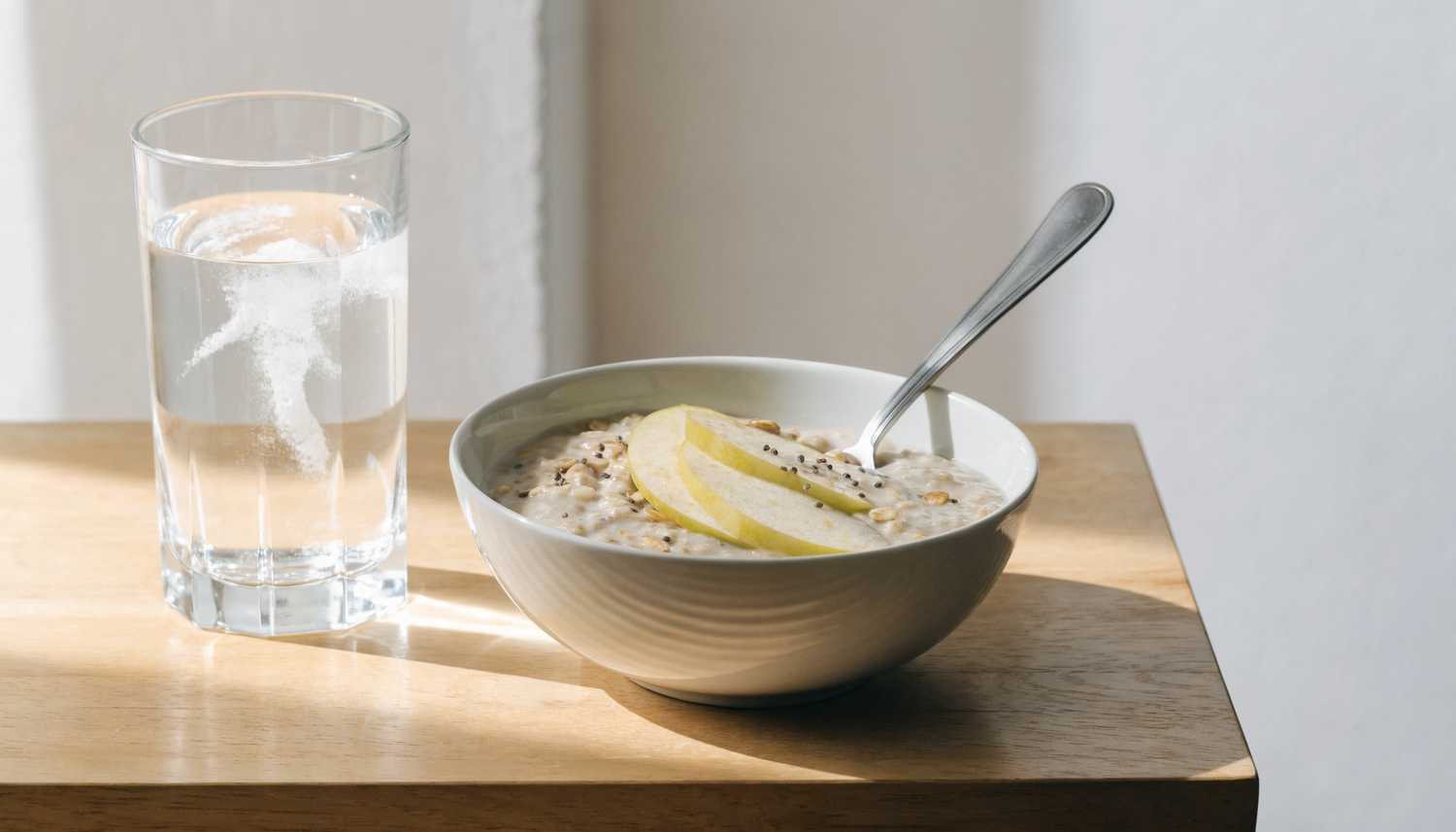
Oats are one of the best sources of soluble fiber, especially in porridge. Add a spoonful of chia or flax seeds, and you'll have a filling breakfast that really keeps you going until lunch.
At lunch and dinner
Lentils, chickpeas, dried beans: legumes are rich in soluble fiber and plant-based protein. One serving a day is already enough to make a real difference to your digestive comfort.
For snacks and everyday hydration
An apple with its skin, a few dried fruits, or a drink designed to combine fiber and minerals: there are several ways to easily add soluble fiber without thinking about it. Buddy electrolytes combine a soluble fiber base with a potassium, magnesium, and sea salt complex to support both digestive comfort and good hydration, with no added sugar.
If you want to check what functional drinks on the market actually contain, including fiber and minerals, we've laid out the ingredients on drinkscore.info.
FAQ: your questions about soluble fiber
How much soluble fiber should you consume per day?
Adults are generally advised to consume between 25 and 30 grams of fiber in total per day, varying between soluble and insoluble sources.
Does soluble fiber help you lose weight?
Not directly, but by prolonging feelings of fullness, it helps regulate your appetite and avoid snacking, which can support a long-term weight goal.
Can soluble fiber cause bloating?
Yes, especially if you increase your intake too quickly or don't drink enough water. The solution is simple: increase amounts gradually and drink enough water.
Where can you find the most soluble fiber?
In oats, legumes, flax and chia seeds, certain fruits such as apples and pears, and ingredients such as inulin.
Should you choose between soluble and insoluble fiber if you have digestive issues?
If you have a sensitive gut, it's often better to prioritize soluble fiber, which is gentler on digestion, and temporarily limit insoluble fiber, which can be more irritating for some people.
Soluble fiber isn't a fad: it makes a real difference to digestion, the microbiome, and satiety, provided you combine it with good hydration. Start gradually, listen to your body, and give it time to adapt.